
Kung May OFW sa Iyong Customer Base, Basahin Ito

Kung May OFW sa Iyong Customer Base, Basahin Ito
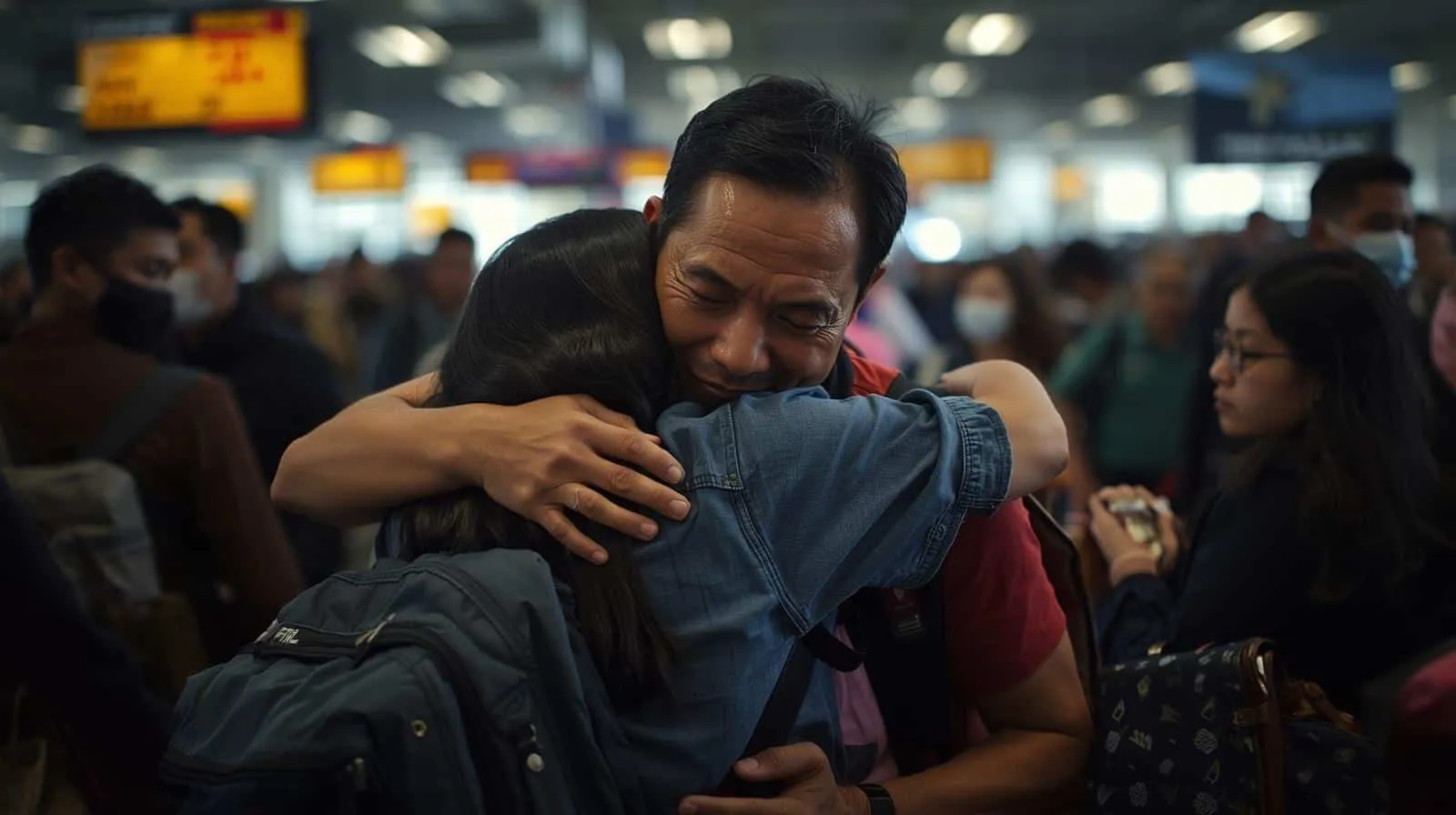
Every month, millions of Filipino families receive money from a loved one working abroad. That money pays for groceries, school fees, house repairs — and yes, it pays for the products and services that small businesses like yours provide.
There are currently over 2.4 million Filipinos in the Middle East. They are nurses, engineers, construction workers, domestic helpers, and professionals who left home to build a better life for their families. And right now, the war in that region is threatening not just their safety — but the income stream that quietly powers much of the Philippine economy.
If your business is in a community with a significant OFW population, this article is for you.
The numbers behind OFW remittances
Before we talk about your business, let’s understand what’s actually at stake:
| Figure | What it means |
| 2.4 million | Filipinos currently in the Middle East |
| $6.48 billion | Remittances sent from Middle East in 2025 |
| 18.19% | Share of total Philippine cash remittances |
| 7.3% of GDP | OFW remittances’ share of the economy (2025) |
| ₱231.8 billion | Estimated remittance drop in worst-case scenario (DEPDev) |
| 556,883 | OFWs at risk of displacement under severe scenario |
| The Middle East is the backbone of overseas Filipino employment. Saudi Arabia and the UAE alone account for nearly 800,000 OFW jobs — and billions in annual remittances sent back home. |
Where the money comes from
In 2025, OFWs in the Middle East sent home approximately $6.48 billion. Here’s the breakdown by country:
| Country | Remittances (2025) | OFWs employed |
| Saudi Arabia | $2.22 billion | ~500,000+ |
| UAE | $1.52 billion | ~300,000+ |
| Kuwait, Qatar & others | ~$2.7 billion | ~300,000+ |
| Total Middle East | $6.48 billion | 1.1 million+ |
How a drop in remittances hits your negosyo
Here is the chain reaction that every small business owner in an OFW-heavy community needs to understand:
When an OFW loses their job, gets repatriated, or earns less due to economic slowdown in their host country — their family back home receives less money. That family then spends less. And the businesses that depend on that family’s spending feel it directly.
It is not dramatic or sudden. It creeps in quietly — fewer visits, smaller orders, delayed payments. But over weeks and months, it reshapes your sales pattern entirely.
Which businesses are most exposed
| Business type | Why exposed | Risk level |
| Sari-sari & convenience stores | OFW families are often the most consistent buyers — buying in volume, paying on time. | HIGH |
| Real estate & housing | Up to 60% of OFW remittances historically go toward real estate. A drop hits brokers and contractors. | HIGH |
| Schools & tutorial centers | OFW families invest heavily in education. Enrolment and fees are vulnerable. | HIGH |
| Remittance & money services | Lower remittance volumes mean fewer transactions — directly cutting your bottom line. | HIGH |
| Food businesses & carinderias | Discretionary food spending drops when household income shrinks. | MEDIUM |
| Salons, spas & lifestyle | These are among the first expenses cut when budgets tighten. | MEDIUM |
What to do if your business serves an OFW community
- Know your customer base honestly
What percentage of your regular customers are OFW families? If it’s significant, you need to plan for a possible dip in their spending over the next few months.
- Diversify your customer base now
Don’t wait until sales drop to start attracting non-OFW customers. Start broadening your reach today — online, nearby barangays, different customer segments.
- Offer more value-driven options
When budgets tighten, customers don’t disappear — they trade down. Give them a smaller, more affordable version of what you offer so they stay with you.
- Strengthen relationships with your best customers
Loyalty is built before the crisis, not during it. Reach out to your top OFW-family customers now. Check in. Show them you care. They will remember that.
- Watch — but don’t panic over — the news
Historically, Filipino remittances have been resilient even during crises. Some OFWs actually send more during uncertain times to help their families. Monitor the situation, but don’t overreact.
| Historically, remittances have been resilient even during major shocks — including COVID-19. But a prolonged Middle East conflict is a different kind of risk. Prepare for the possibility, but don’t assume the worst. |
The Butz Take
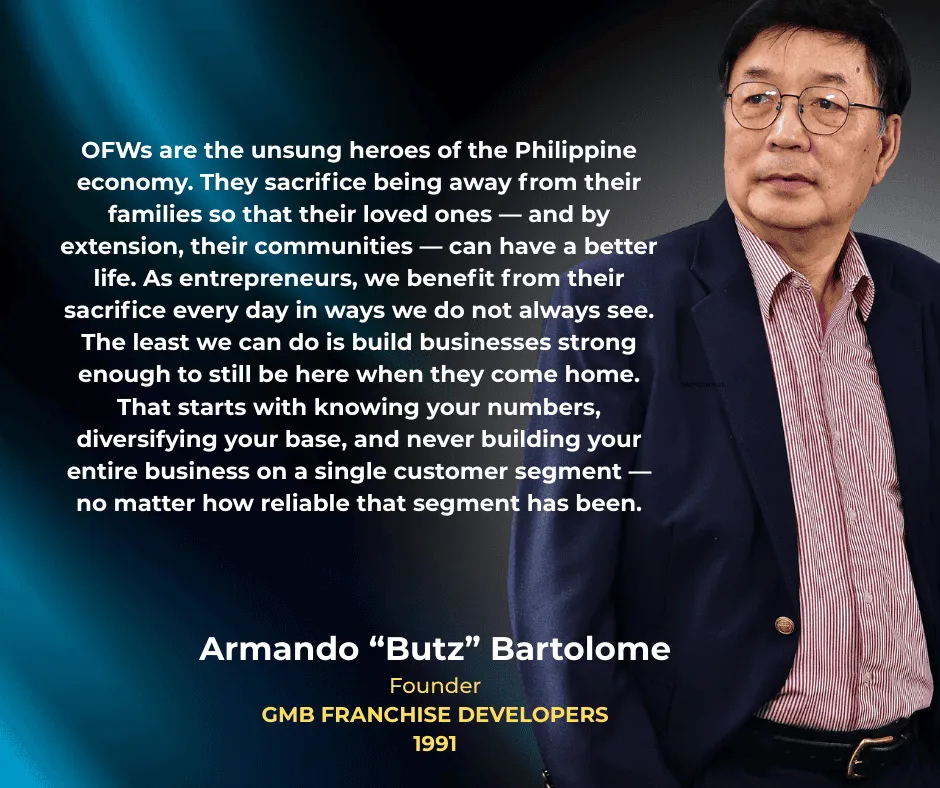
| Butz Bartolome — The Business Mentor “OFWs are the unsung heroes of the Philippine economy. They sacrifice being away from their families so that their loved ones — and by extension, their communities — can have a better life. As entrepreneurs, we benefit from their sacrifice every day in ways we do not always see. The least we can do is build businesses strong enough to still be here when they come home. That starts with knowing your numbers, diversifying your base, and never building your entire business on a single customer segment — no matter how reliable that segment has been.” |
The oil crisis is testing everyone. But businesses that understand who their customers really are — and what those customers’ lives look like — will always find a way to adapt.
Know your community. Serve it well. And build a business that outlasts any crisis.
About the Author
Armando “Butz” Bartolome is one of the Philippines’ most trusted business mentors and franchise developers. Founder of GMB Franchise Developers since 1991, he has helped hundreds of Filipinos build and grow their businesses. For mentoring inquiries, email [email protected] or visit butzbartolome.com.